Shiro 是一款主流的 Java 安全框架,它不依赖任何容器,可以独立运行在 Java SE 和 Java EE 项目中,它的主要作用是对访问系统的用户进行身份认证(身份认证也就是登录)、授权、会话管理、加密等操作,用来解决安全管理的系统化框架。
2.Shiro 核心组件
权限安全管理 在一个系统中是必不可少的部分,也是决定系统安全质量的关键所在,一个系统的强大全靠权限安全模块支撑。
说起权限,之不难想到 RBAC(Role-Based Access Control,基于角色的访问控制) 这个权限模型,权限就是功能的意思,而 RBAC 简单的说就是由 用户、角色、权限 组成的,一个用户可以拥有若干角色,每一个角色也可以拥有若干权限,给用户赋予角色,给角色赋予权限。在这种模型中,用户与角色之间,角色与权限之间,一般都是多对多的关系。
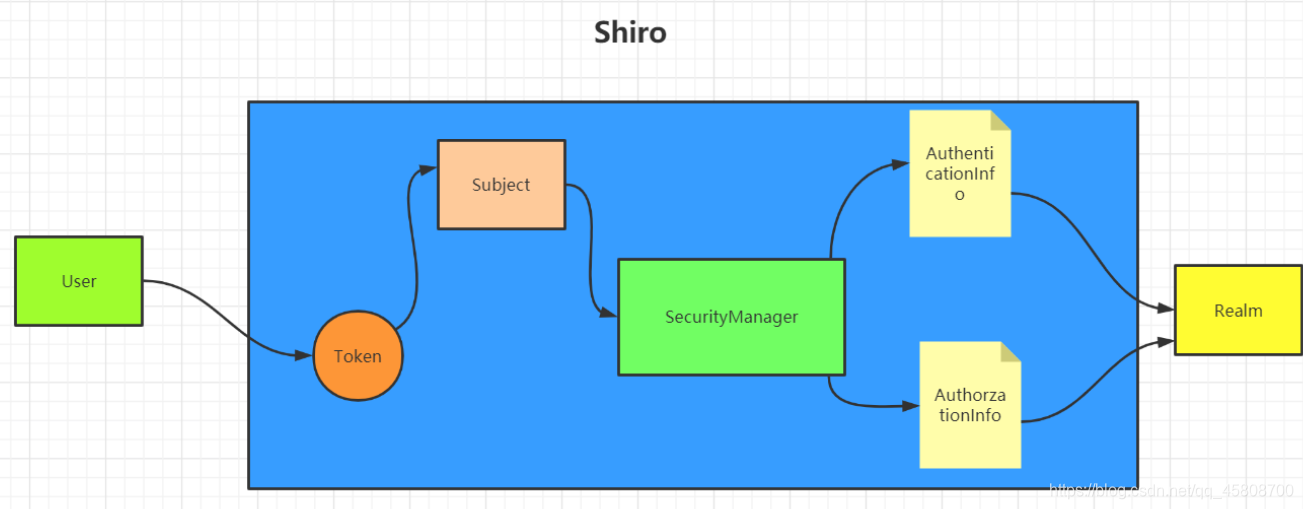
1、UsernamePasswordToken,Shiro 用来封装用户登录信息,使用用户的登录信息来创建令牌 Token。
2、SecurityManager,Shiro 的核心部分,负责安全认证和授权。
3、Subject,Shiro 的一个抽象概念,包含了用户信息。
4、Realm,开发者自定义的模块,根据项目的需求,验证和授权的逻辑全部写在 Realm 中。
5、AuthenticationInfo,用户的角色信息集合,认证时使用。
6、AuthorzationInfo,角色的权限信息集合,授权时使用。
7、DefaultWebSecurityManager,安全管理器,开发者自定义的 Realm 需要注入到 DefaultWebSecurityManager 进行管理才能生效。
8、ShiroFilterFactoryBean,过滤器工厂,Shiro 的基本运行机制是开发者定制规则,Shiro 去执行,具体的执行操作就是由 ShiroFilterFactoryBean 创建的一个个 Filter 对象来完成。
![在这里插入图片描述]()
3.Spring Boot 整合 Shiro
编写认证和授权规则:
认证过滤器
anon:无需认证。
authc:必须认证。
authcBasic:需要通过 HTTPBasic 认证。
user:不一定通过认证,只要曾经被 Shiro 记录即可,比如:记住我。
授权过滤器
perms:必须拥有某个权限才能访问。
role:必须拥有某个角色才能访问。
port:请求的端口必须是指定值才可以。
rest:请求必须基于 RESTful,POST、PUT、GET、DELETE。
ssl:必须是安全的 URL 请求,协议 HTTPS。
创建 3 个页面,main.html、manage.html、administrator.html,访问权限如下:
1、必须登录才能访问 main.html
2、当前用户必须拥有 manage 授权才能访问 manage.html
3、当前用户必须拥有 administrator 角色才能访问 administrator.html
1、创建 Spring Boot 应用,集成 Shiro 及相关组件,pom.xml
1
2
3
4
5
6
7
8
9
10
11
12
13
14
15
16
17
18
19
20
21
22
23
24
25
26
27
28
29
30
31
32
33
34
35
36
37
38
39
40
41
42
43
44
45
| <dependencies>
<dependency>
<groupId>org.springframework.boot</groupId>
<artifactId>spring-boot-starter-thymeleaf</artifactId>
</dependency>
<dependency>
<groupId>org.springframework.boot</groupId>
<artifactId>spring-boot-starter-web</artifactId>
</dependency>
<dependency>
<groupId>org.projectlombok</groupId>
<artifactId>lombok</artifactId>
<optional>true</optional>
</dependency>
<dependency>
<groupId>org.apache.shiro</groupId>
<artifactId>shiro-spring</artifactId>
<version>1.5.3</version>
</dependency>
<dependency>
<groupId>mysql</groupId>
<artifactId>mysql-connector-java</artifactId>
</dependency>
<dependency>
<groupId>com.baomidou</groupId>
<artifactId>mybatis-plus-boot-starter</artifactId>
<version>3.3.1.tmp</version>
</dependency>
<dependency>
<groupId>org.springframework.boot</groupId>
<artifactId>spring-boot-starter-test</artifactId>
<scope>test</scope>
<exclusions>
<exclusion>
<groupId>org.junit.vintage</groupId>
<artifactId>junit-vintage-engine</artifactId>
</exclusion>
</exclusions>
</dependency>
</dependencies>
|
2、自定义 Shiro 过滤器
1
2
3
4
5
6
7
8
9
10
11
12
13
14
15
16
17
18
19
20
21
22
23
24
25
26
27
28
29
30
31
32
33
34
35
36
37
38
39
| public class AccoutRealm extends AuthorizingRealm {
@Autowired
private AccountService accountService;
@Override
protected AuthorizationInfo doGetAuthorizationInfo(PrincipalCollection principalCollection) {
Subject subject = SecurityUtils.getSubject();
Account account = (Account) subject.getPrincipal();
Set<String> roles = new HashSet<>();
roles.add(account.getRole());
SimpleAuthorizationInfo info = new SimpleAuthorizationInfo(roles);
info.addStringPermission(account.getPerms());
return info;
}
@Override
protected AuthenticationInfo doGetAuthenticationInfo(AuthenticationToken authenticationToken) throws AuthenticationException {
UsernamePasswordToken token = (UsernamePasswordToken) authenticationToken;
Account account = accountService.findByUsername(token.getUsername());
if(account != null){
return new SimpleAuthenticationInfo(account,account.getPassword(),getName());
}
return null;
}
}
|
3、配置类
1
2
3
4
5
6
7
8
9
10
11
12
13
14
15
16
17
18
19
20
21
22
23
24
25
26
27
28
29
30
31
32
33
34
35
36
| @Configuration
public class ShiroConfig {
@Bean
public ShiroFilterFactoryBean shiroFilterFactoryBean(@Qualifier("securityManager") DefaultWebSecurityManager securityManager){
ShiroFilterFactoryBean factoryBean = new ShiroFilterFactoryBean();
factoryBean.setSecurityManager(securityManager);
Map<String,String> map = new Hashtable<>();
map.put("/main","authc");
map.put("/manage","perms[manage]");
map.put("/administrator","roles[administrator]");
factoryBean.setFilterChainDefinitionMap(map);
factoryBean.setLoginUrl("/login");
factoryBean.setUnauthorizedUrl("/unauth");
return factoryBean;
}
@Bean
public DefaultWebSecurityManager securityManager(@Qualifier("accoutRealm") AccoutRealm accoutRealm){
DefaultWebSecurityManager manager = new DefaultWebSecurityManager();
manager.setRealm(accoutRealm);
return manager;
}
@Bean
public AccoutRealm accoutRealm(){
return new AccoutRealm();
}
@Bean
public ShiroDialect shiroDialect(){
return new ShiroDialect();
}
}
|
4.Shiro 整合 Thymeleaf
1、pom.xml 引入依赖
1
2
3
4
5
| <dependency>
<groupId>com.github.theborakompanioni</groupId>
<artifactId>thymeleaf-extras-shiro</artifactId>
<version>2.0.0</version>
</dependency>
|
2、配置类添加 ShiroDialect
1
2
3
4
| @Bean
public ShiroDialect shiroDialect(){
return new ShiroDialect();
}
|
3、index.html
1
2
3
4
5
6
7
8
9
10
11
12
13
14
15
16
17
18
19
20
21
22
23
24
25
26
27
28
29
30
| <!DOCTYPE html>
<html lang="en" xmlns:th="http://www.thymeleaf.org" xmlns:shiro="http://www.thymeleaf.org/thymeleaf-extras-shiro">
<head>
<meta charset="UTF-8">
<title>Title</title>
<link rel="shortcut icon" href="#"/>
</head>
<body>
<h1>index</h1>
<div th:if="${session.account != null}">
<span th:text="${session.account.username}+'欢迎回来!'"></span><a href="/logout">退出</a>
</div>
<a href="/main">main</a> <br/>
<div shiro:hasPermission="manage">
<a href="manage">manage</a> <br/>
</div>
<div shiro:hasRole="administrator">
<a href="/administrator">administrator</a>
</div>
</body>
</html>
="/main">main</a> <br/>
<div shiro:hasPermission="manage">
<a href="manage">manage</a> <br/>
</div>
<div shiro:hasRole="administrator">
<a href="/administrator">administrator</a>
</div>
</body>
</html>
|